Therm process Engineering Pvt. Ltd. designs and manufactures walking hearth and walking beam reheating furnaces for steel rolling mills. Unlike a pusher furnace, a walking hearth furnace does not push billets against each other. A lift-and-shift mechanism raises the charge, moves it forward and sets it down again, one step at a time. This makes it well suited to alloy steel and larger billet sections, where skid marks, scale and uneven heating matter. Therm process furnaces can be fired on furnace oil, CNG, coal gas, LPG, producer gas or dual fuel. Send us your billet data for a configuration proposal.
What Is a Walking Hearth Furnace?
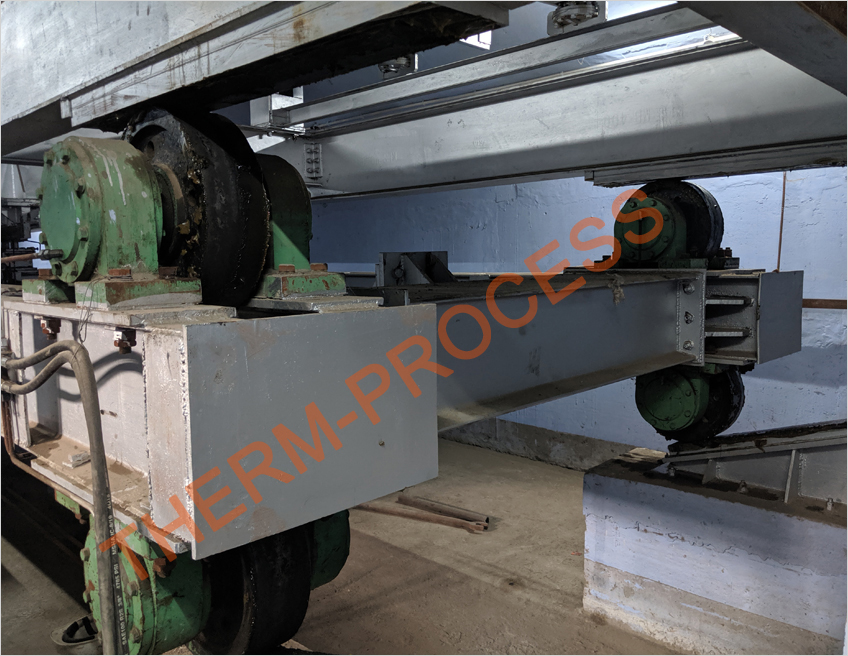
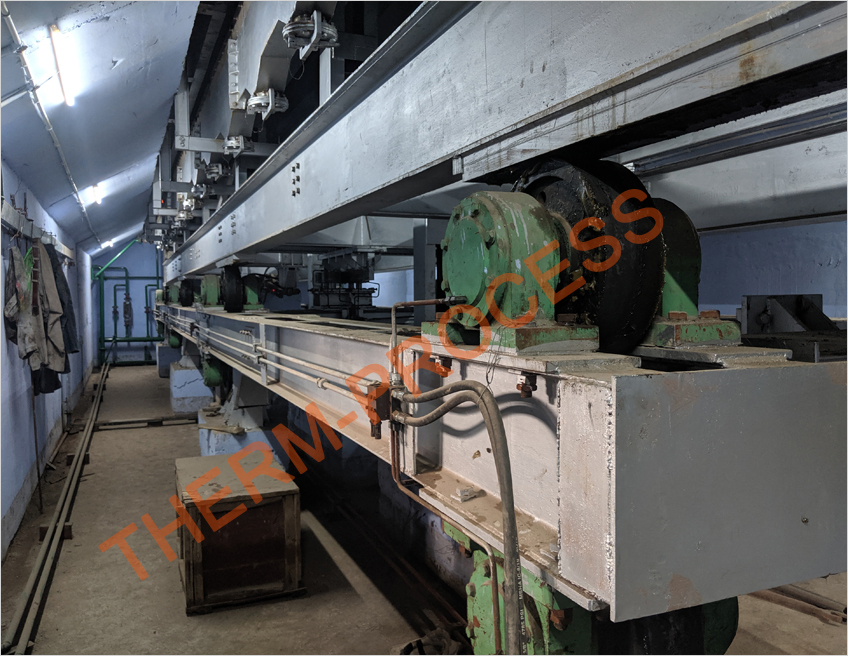
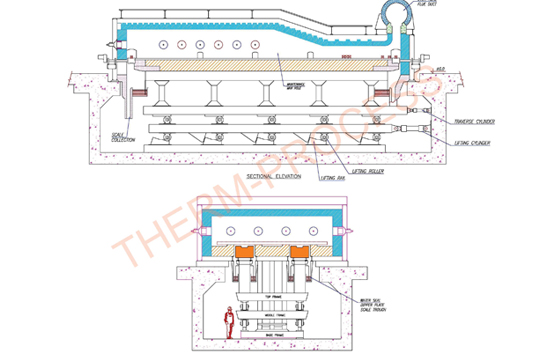
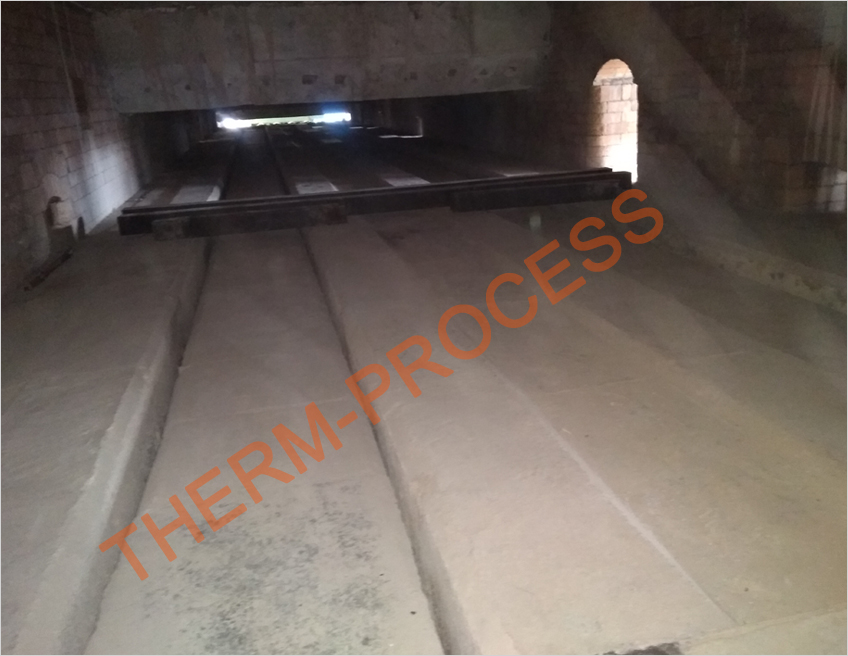
A walking hearth furnace is a continuous reheating furnace. The charge is carried through the furnace by a moving section of the hearth rather than pushed. The movable hearth rises and lifts the billets off the fixed hearth. It moves them forward by a set stroke, lowers them, and returns to its start position. The cycle repeats at a rate matched to rolling-mill demand.
A walking beam furnace uses the same lift-and-shift principle, but the billets rest on raised beams instead of the hearth floor. That allows burners below the charge, so the billet is heated from all sides. A walking hearth furnace heats mainly from the top. Mechanically, the two designs are very similar.
Billets are not pushed against each other and do not slide on skids. This avoids the surface damage and skid marks common in pusher furnaces. Billets can also be spaced apart, so hot gases reach more of the surface. That improves temperature uniformity through the section, which is critical for alloy steel and large billets.
Therm process Walking Hearth & Walking Beam Furnaces
Therm process designs walking hearth furnaces primarily for alloy steel and larger billet cross-sections. In these cases, a pusher furnace's limitations show up as skid marks, scale loss or poor core temperature.
Therm process describes its design approach as simple to construct, with effective heating and soaking of billets. It can cater to different billet sizes within limits, and water-cooling energy losses are negligible because the charge does not travel on water-cooled skids.
The furnace can be emptied from either side at the end of a campaign or before a shutdown. With walking movement doing most of the conveying, the charging pusher can be made lighter or eliminated entirely.
The complete combustion system is supplied by Thermprocess. This includes burners for oil, gaseous or dual fuel, recuperators, combustion blowers and fuel handling units. Microprocessor-based process controls and automatic material handling can be incorporated to suit the mill's automation level.
Technical Specifications
| Parameter |
Specification |
| Furnace Type |
Continuous walking hearth / walking beam reheating furnace |
| Charge Movement |
Lift-and-shift walking mechanism |
| Standard Output |
5 TPH to 75 TPH (alloy steel / large section designs 30-70 TPH) |
| Charge |
Billets - alloy steel and higher cross-sections; MS / CS as required |
| Raw Material Size |
100 x 100 mm to 160 x 160 mm; up to 6"-12" sq for large-section designs |
| Billet Length |
1.5 m to 12 m |
| Fuel |
Furnace oil / CNG / coal gas / LPG / producer gas / dual fuel |
| Temperature Uniformity |
30 °C (Therm process design data) |
| Scale Loss |
Less than 1% (Therm process design data) |
| Heat Recovery |
Recuperator, as per design |
| Temperature Control |
Microprocessor-based controls, as per application |
| Customization |
Hearth width, stroke, zoning, firing and automation as per requirement |
Key Features
- Lift-and-shift conveying. Billets are carried forward, not pushed, which eliminates billet-to-billet friction and skid marks.
- Better soaking of large sections. Spaced charge and controlled zoning let heat reach the billet core evenly.
- Negligible water-cooling loss. There are no water-cooled skids carrying the charge, so less heat is lost to cooling water.
- Furnace can be emptied. The walking mechanism can discharge all billets from either side before shutdowns or size changes.
- Flexible size changes. Therm process states that any size combination can be changed within the furnace.
- Lighter charging equipment. The charging pusher can be downsized or eliminated.
- Walking beam option. Supports bottom firing for all-round heating where required.
How a Walking Hearth Furnace Works
- Charging Billets are placed on the fixed hearth at the charging end, spaced as the design allows.
- Lift The walking hearth, or the walking beams, rises and lifts the billets clear of the fixed hearth.
- Advance The moving hearth travels forward by one stroke, carrying the charge towards the discharge end.
- Lower and return The charge is set down on the fixed hearth. The walking section drops and returns to its start position.
- Heating and soaking As billets step through the preheating, heating and soaking zones, burners raise them to rolling temperature. The soaking zone equalises surface and core.
- Discharge Heated billets are discharged to the rolling line. At campaign end, the furnace can be emptied fully.
Applications of Walking Hearth Furnaces
- Reheating alloy steel billets. Grades that are sensitive to surface damage, decarburisation or uneven heating.
- Reheating large cross-section billets. Sections where a pusher furnace struggles to soak the core evenly.
- Rolling mills with frequent size changes. Mills that roll different sections and need to change billet size without long transition periods.
- Mills requiring full furnace emptying. Operations with planned shutdowns, where leaving billets in a hot furnace is undesirable.
- Pusher furnace replacement. Mills upgrading to improve surface quality and reduce scale.
Industries Using Walking Hearth Furnaces
- Alloy and special steel rolling mills. Reheating for bar, rod and section rolling of engineering steels.
- Steel plants. Billet reheating downstream of casting lines.
- Forging industry. Continuous reheating of larger billets ahead of forging operations.
- Bright bar and engineering steel producers. Where surface quality of the rolled product matters.
Benefits of a Walking Hearth Furnace
- Better surface quality No skid marks and no billet-to-billet friction.
- Lower scale loss Therm process design data states scale loss below 1%.
- More uniform billet temperature Improves rolling consistency and reduces mill stoppages from cold billets.
- Operational flexibility The furnace can be emptied, and billet sizes can be changed.
- Lower cooling-water loss Compared with skid-type pusher furnaces.
- Simpler charging A lighter charging pusher, or none, reduces mechanical load at the entry end.
Custom Walking Hearth Furnace Solutions
Therm process engineers each walking hearth or walking beam furnace around the mill's real operating conditions:
- Steel grade and billet cross-section
- Billet length and size mix
- Required output in TPH
- Discharge temperature
- Walking hearth or walking beam configuration
- Fuel type and availability
- Heat recovery and recuperator design
- Drive type for the walking mechanism
- Level of automation and process control
- Plant layout and space
- New installation or replacement of an existing pusher furnace
Why Choose Therm process?
- Since 1997 Industrial furnace and burner manufacturer based in Mulund, Mumbai.
- In-house engineering Furnace, burner and recuperator design is done internally.
- Combustion expertise Oil, gas and dual-fuel burners, radiant tube burners, recuperators and fuel handling units are manufactured in-house.
- ISO 9001 & ISO 14001 certified as stated by the company.
- Complete scope Design, supply, erection and commissioning of reheating furnaces for steel plants and rolling mills.
Related Therm process Products
- Pusher Furnace
- Reheat Furnace
- Forging Furnace / Chamber Furnace
- Recuperator / Economizer
- Industrial Burners
- Furnace Accessories
Frequently Asked Questions
Q1. What is a walking hearth furnace?
A walking hearth furnace is a continuous reheating furnace. A moving hearth lifts billets, advances them one step and lowers them again. Billets are carried rather than pushed, which avoids skid marks and friction between billets.
Q2.What is the difference between a walking hearth and a walking beam furnace?
Both use the same lift-and-shift mechanism. In a walking beam furnace, billets rest on raised beams, so burners below can heat the charge from all sides. A walking hearth furnace heats mainly from the top.
Q3. When should I choose a walking hearth furnace over a pusher furnace?
Choose a walking hearth furnace for alloy steel, larger cross-sections, frequent size changes, or when the furnace must be emptied during shutdowns. For standard MS billets at moderate sections, a pusher furnace is often more economical.
Q4. What capacity walking hearth furnaces does Therm process build?
Therm process lists walking hearth furnaces from 5 TPH to 75 TPH. Alloy steel and large-section designs are listed at 30 to 70 TPH. Final capacity depends on billet size, grade and discharge temperature.
Q5. What fuels can be used?
Therm process walking hearth furnaces can be fired with furnace oil, CNG, coal gas, LPG, producer gas or dual fuel. The combustion system is designed around the fuel available at site.
Q6. Does a walking hearth furnace reduce scale loss?
Yes. Billets are not dragged across skids, and heating can be controlled more evenly. Therm process design data states scale loss below 1% for its walking hearth furnaces.
Q7. What information is needed for a quotation?
Share the steel grade, billet size and length, target TPH, discharge temperature, fuel, and whether the furnace is new or replaces an existing one. A plant layout drawing helps with the proposal.
Looking for a Walking Hearth Furnace Manufacturer in India?
If your mill handles alloy steel, large billets or frequent size changes, a walking hearth furnace may be the right upgrade. Send Therm process your steel grade, billet dimensions, output target, discharge temperature, fuel and plant location. Our engineers will recommend a walking hearth or walking beam configuration.
Request a Quote