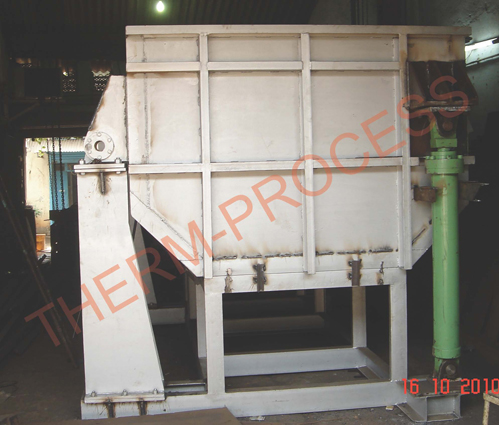
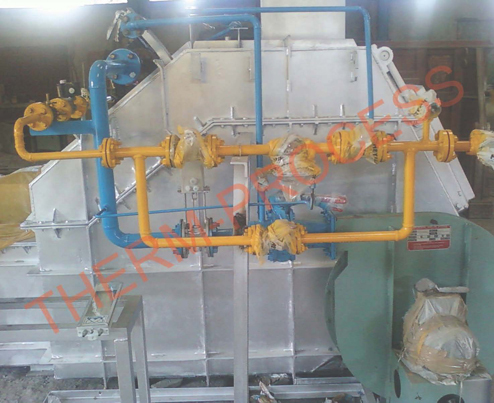
Tilting Type Aluminum Melting Furnace
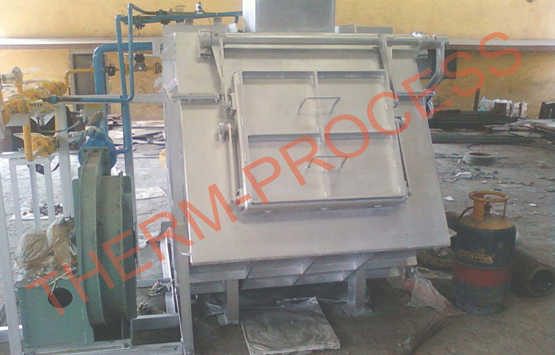
Aluminum Melting Furnace - Mechanical Tilting
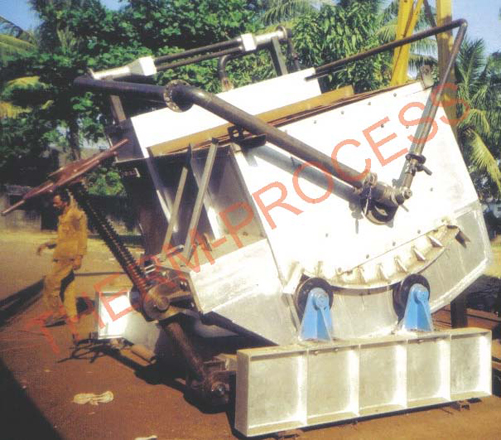
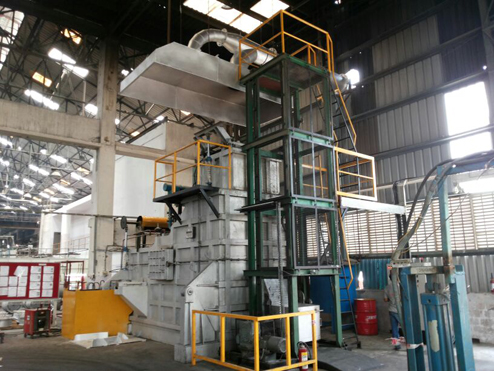
Tower type melting Tilting Furnace
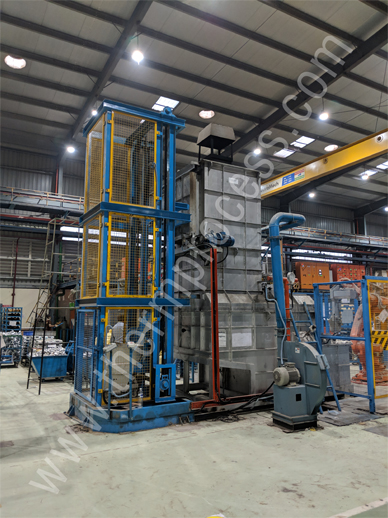
Tower Melting Furnace for Aluminium
Therm process Engineering Pvt. Ltd. designs and manufactures aluminium melting and holding furnaces for die casting shops and aluminium foundries. Therm process offers four types: tilting type (manual or hydraulic), tower type, crucible type holding, and stationary melting/holding furnaces. Its continuous melting and holding furnace combines burner-fired melting with an electrically heated holding chamber. This delivers molten metal at a steady temperature to the casting cell. Share your alloy, melting rate, bath capacity and casting process for a furnace recommendation.
What Is an Aluminium Melting & Holding Furnace?
An aluminium melting furnace converts solid aluminium into molten metal for casting. The solid charge may be ingots, returns or clean scrap. A holding furnace then keeps that molten metal at a controlled pouring temperature until it is ladled or transferred to the casting machine.
Many foundries use two separate units. A melting and holding furnace combines both functions. The melting side is sized to meet the melt rate, and the holding side is sized to keep enough metal ready for casting without temperature swings.
Temperature control matters more with aluminium than with many metals. Overheating the melt increases oxidation and dross, which means metal loss and the risk of oxide inclusions in castings. Under-temperature metal causes misruns and cold shuts. A good aluminium furnace melts quickly, then holds the metal within a narrow band. It must also keep burner flames and hot spots from damaging the melt.
Furnace types differ mainly in how metal is charged and tapped. Tilting furnaces pour by tilting the vessel. Stationary furnaces are tapped or ladled. Tower furnaces preheat the charge in a shaft above the bath, and crucible furnaces hold metal in a removable or fixed crucible.
Therm process Aluminium Melting & Holding Furnaces
Therm process offers four aluminium furnace types:
1. Tilting type melting furnace, operated manually or hydraulically, for pouring into ladles or launders.
2. Tower type aluminium melting furnace, where the charge is loaded into a shaft and preheated before it reaches the bath.
3. Crucible type holding furnace, for holding metal at the casting station.
4. Stationary aluminium melting / holding furnace, for continuous melting and holding with ladle-out or tapping.
Its continuous melting and holding furnace (Skelner type) is designed for aluminium die casting and casting industries.
Melting side: fired by Therm process's own super low speed luminous flame burners. These give a soft, radiant flame instead of a harsh jet impinging on the metal.
Holding side: uses electric heaters. The holding chamber is kept about 50°C above molten metal temperature. This limits over-temperature conditions that lead to hard oxide formation
Therm process states the design offers low energy cost, long heater life, low maintenance, a small footprint and good working conditions around the furnace. Crucible furnaces for aluminium melting are also supplied with in-house Therm process burners.
Technical Specifications
| Parameter |
Specification |
| Furnace Types |
Tilting (manual / hydraulic), tower type, crucible holding, stationary melting/holding |
| Operation |
Batch or continuous melting and holding |
| Melting Heating |
Burner-fired: Therm process super low speed luminous flame burners |
| Holding Heating |
Electric heaters (continuous melting/holding design) |
| Holding Chamber Temperature |
Approx. 50 °C above molten metal temperature |
| Charge |
Aluminium ingots / clean scrap / returns, as per application |
| Reference unit: hydraulic tilting furnace |
|
| Bath Capacity |
6000 kg |
| Charging Temperature |
Ambient (30 °C) |
| Furnace Temperature |
1000 °C max |
| Melting Rate |
1500 kg (per hour, to be confirmed) |
| Fuel |
As per site availability |
| Temperature Control |
As per application |
| Customization |
Bath capacity, melt rate, furnace type and tilting mechanism as per requirement |
Key Features
- Four furnace types Tilting, tower, crucible holding and stationary, to match casting practice.
- Combined melting and holding Continuous operation suited to die-casting cells.
- Luminous flame burners Low-velocity flame for gentler heat transfer to the melt.
- Electric holding chamber Stable holding temperature with controlled superheat.
- Reduced hard oxide formation Limiting chamber over-temperature reduces hard oxide build-up.
- Hydraulic or manual tilting Choice of pouring mechanism.
- Compact footprint Designed for small space utilisation beside the casting machine.
How an Aluminium Melting & Holding Furnace Works
- Charging Ingots, returns or clean scrap are charged into the melting chamber, or into the shaft of a tower furnace.
- Melting Burners raise the charge to melting temperature. In tower designs, hot gases preheat the incoming charge first.
- Transfer to holding Molten metal flows or is transferred into the holding chamber.
- Holding Electric heaters keep the metal at pouring temperature, with the chamber about 50 °C above metal temperature.
- Metal treatment Degassing, fluxing or drossing are carried out as per foundry practice.
- Pouring or ladling Metal is tapped, ladled or poured by tilting into the casting machine or ladle.
- Continuous cycle Fresh charge enters the melting side while the holding side feeds casting.
Applications of Aluminium Melting Furnaces
- High-pressure die casting Continuous supply of metal at pouring temperature to die-casting machines.
- Gravity and low-pressure die casting Melting and holding for permanent mould casting.
- Sand casting Batch melting for foundry pours using tilting furnaces.
- Melting of returns and clean scrap Recycling in-house gates, runners and rejects.
- Holding at the casting cell Crucible holding furnaces beside machines.
Industries Using Aluminium Melting Furnaces
- Aluminium die casting Auto parts, housings and consumer product castings.
- Automotive Engine, transmission and structural aluminium components.
- Aluminium foundries Sand and gravity casting of general engineering parts.
- Electrical and lighting Motor housings, luminaire bodies and enclosures.
- Aluminium industry Secondary melting and casting operations.
Benefits of a Therm process Aluminium Furnace
- Steady metal temperature at the casting machine, reducing temperature-related casting defects.
- Less hard oxide formation from controlled holding-chamber superheat.
- Lower energy cost from continuous melting and holding in one unit.
- Long heater life and low maintenance, as stated for the holding section.
- Space saving beside the casting cell.
- Better working conditions around the furnace.
- Type choice, Tilting, tower, crucible or stationary, to fit the process.
Custom Aluminium Melting Furnace Solutions
Therm process sizes each aluminium furnace around:
- Alloy and charge type (ingots, returns, scrap)
- Required melting rate
- Holding or bath capacity
- Casting process (HPDC, gravity, sand)
- Number of casting machines served
- Tapping or pouring method (tilt, ladle-out, tap hole)
- Tilting mechanism (manual or hydraulic)
- Fuel and power available
- Continuous or batch operation
- Floor space and cell layout
Why Choose Therm process?
- Established 1997. Designer and manufacturer of furnaces and burners, Mumbai.
- In-house burner technology, including the super low speed luminous flame burner used in its melting furnaces.
- Serves the aluminium industry alongside steel plants, rolling mills and automotive customers.
- ISO 9001 & ISO 14001 certified, as stated by the company.
- Full range of melting, holding and crucible furnaces, plus ladle preheaters and combustion accessories.
Related Therm process Products
- Crucible Furnace
- Ladle Preheater
- Industrial Burners
- Combustion Blower
Frequently Asked Questions
Q1. What is an aluminium melting and holding furnace?
It is a furnace that melts solid aluminium and then holds the molten metal at pouring temperature for casting. Combined units reduce transfers and keep a steady supply of metal to die-casting machines.
Q2. What types of aluminium melting furnaces does Therm process offer?
Therm process offers tilting type furnaces (manual or hydraulic), tower type melting furnaces, crucible type holding furnaces, and stationary melting and holding furnaces.
Q3. What is a Skelner (Sklenar) furnace?
It is Therm process's continuous aluminium melting and holding furnace. Burners melt the charge, and an electrically heated chamber holds the molten metal for casting. It is designed for die casting and aluminium casting industries.
Q4. Why keep the holding chamber only about 50°C above metal temperature?
Limiting chamber superheat avoids over-temperature conditions at the metal surface. These conditions promote hard oxide formation, which leads to dross, metal loss and possible inclusions in castings.
Q5. What capacity can a tilting aluminium furnace have?
One Therm process hydraulic tilting furnace reference has a 6000 kg bath, a 1500 kg melting rate and a maximum furnace temperature of 1000°C. Capacity is designed to suit each foundry's needs.
Q6. Which furnace type is best for die casting?
For die casting, a continuous melting and holding furnace or a crucible holding furnace at the machine is usually preferred. Tilting furnaces suit batch pours in foundries. The right choice depends on melt rate and number of machines.
Looking for an Aluminium Melting Furnace Manufacturer in India?
Tell Therm process how much aluminium you need to melt and how you cast it, and we will recommend a furnace to match. Share your alloy, charge type, melting rate, bath or holding capacity, casting process, number of machines, fuel and location.
Request a Quote