Industrial Furnaces & Burners

Hardening Furnace Manufacturer in India

 Home / Products / >Hardening Furnace

Hardening Furnace Manufacturer in India

Furnaces
Furnaces


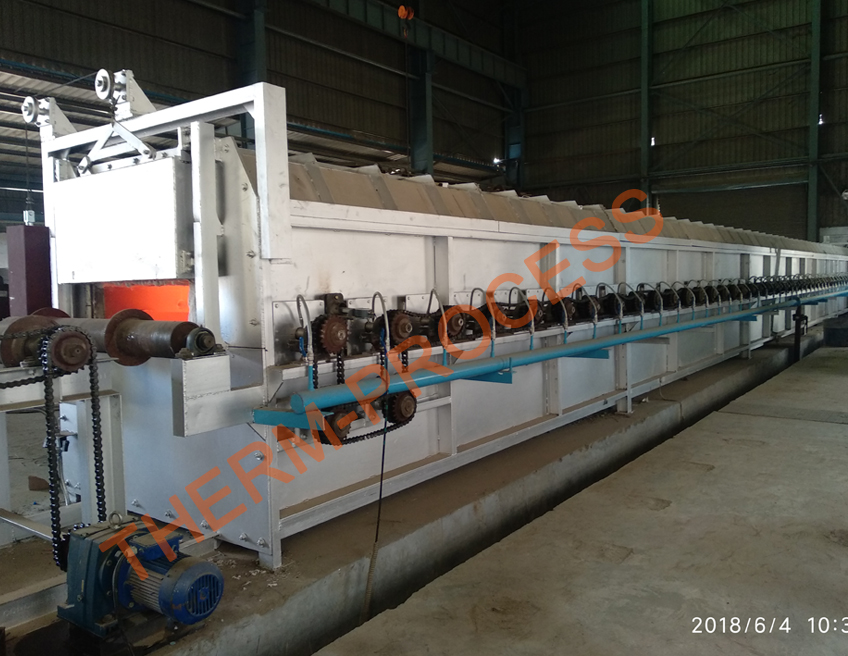
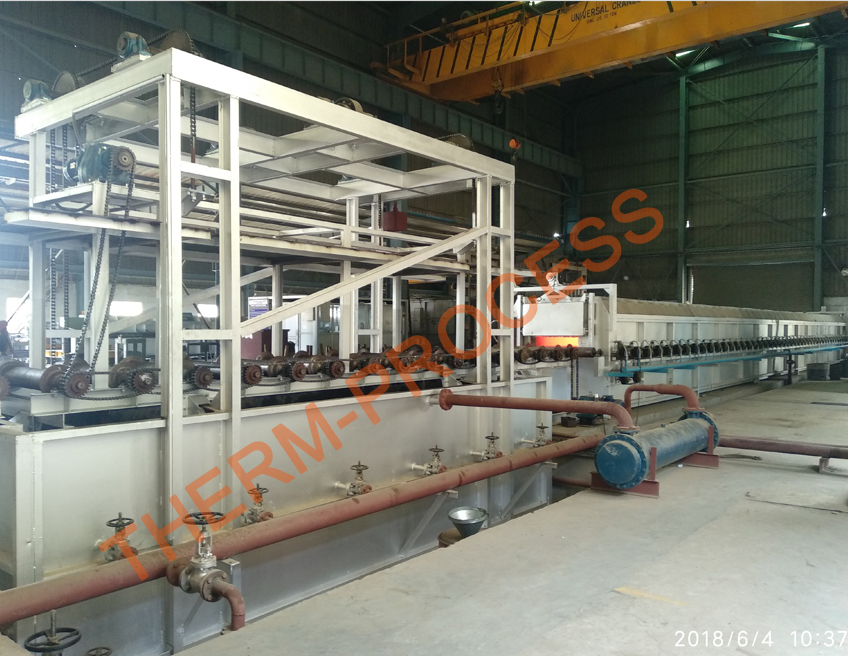
Therm process Engineering Pvt. Ltd. designs and manufactures hardening furnaces for engineering components and forgings. A hardening furnace heats steel above its critical temperature, so it can then be quenched to a hard, wear-resistant structure. Therm process builds hardening and tempering furnaces, also known as universal furnaces, which handle both steps of the heat treatment cycle. Each furnace is custom designed around the customer's components, batch size and process specification. Share your material, part size and hardness requirement to receive a recommendation.

What Is a Hardening Furnace?

Hardening is a heat treatment that increases the hardness and strength of steel. The component is heated above its critical (austenitising) temperature and held until the section is uniformly transformed. It is then cooled rapidly by quenching in oil, water, polymer or air, depending on the grade. Rapid cooling produces a hard martensitic structure. A hardening furnace provides the heating and soaking stage. Its job is to bring every part of the load to the correct temperature, hold it for the right time, and release it for quenching without delay. Temperature uniformity matters: under-heated areas won't harden fully, and over-heating can cause grain growth, distortion or cracking.

Hardened steel is strong but brittle, so hardening is almost always followed by tempering. That is why many plants use hardening and tempering furnaces together, or a universal furnace able to run both cycles.

Therm process Hardening Furnaces

Therm process designs and manufactures hardening and tempering furnaces, known as universal furnaces, for hardening and tempering applications across engineering industries. The same range is used for heat treatment of forgings. Furnaces are built from durable materials to withstand daily wear and tear, and are custom designed to the customer's specifications. Therm process sizes the chamber, heating system and loading arrangement around the actual components rather than supplying a fixed catalogue model.K

Heating can be burner-fired, using Thermprocess's own gas, oil or dual-fuel burners, or electrically heated, as per the process. Microprocessor-based controls can be specified to hold hardening temperature and soak time consistently. For stainless steel coils needing solution treatment, heavy components or continuous tempering of bars, Therm process also offers dedicated solution annealing, bogie hearth and roller hearth furnaces.

Technical Specifications

Parameter Specification
Furnace Type Hardening / hardening & tempering (universal) furnace
Process Hardening (austenitising) followed by quench; tempering as per design
Charge Engineering components, forgings
Operating Temperature Available as per material and process
Capacity Available as per application requirement
Heating Method Burner fired (gas / oil / dual fuel) or electric, as per application
Quench As per process (oil / water / polymer / air)
Atmosphere As per process requirement
Loading As per component and batch
Temperature Control Microprocessor-based, as per application
Customization Fully custom designed to customer specification

Key Features

  • Universal design option Hardening and tempering capability.
  • Custom-built to component size and batch.
  • Durable construction for daily production use.
  • In-house burners for fuel-fired designs.
  • Controlled soak for full-section transformation.
  • Suited to forgings as well as machined components.

How the Hardening Process Works

  • Loading Components are placed in the furnace on a hearth, in trays or on fixtures.
  • Heating The furnace raises the load to hardening temperature at a controlled rate.
  • Soaking The load is held until the whole section reaches austenitising temperature.
  • Quenching Parts are transferred quickly to the quench medium.
  • Tempering Parts are reheated to a lower temperature to reduce brittleness.
  • Inspection Hardness and, where needed, microstructure are checked.

Applications

  • Through-hardening of engineering components: shafts, gears, pins, tools.
  • Hardening of forgings before machining or final use.
  • Hardening and tempering (Q&T) to achieve specified mechanical properties.
  • Tool and die hardening, in suitable furnace sizes.
  • Industries Served

    • Engineering and fabrication
    • Forging industry
    • Automotive component manufacturing
    • Commercial heat treatment shops

    Benefits

    • Consistent hardness from controlled temperature and soak.
    • One furnace for two processes with universal designs.
    • Right-sized chamber, which avoids energy waste on oversized furnaces.
    • Single supplier for furnace and combustion system.

    Custom Hardening Furnace Solutions

    Share the following:

    • Material grade
    • Component dimensions and weight
    • Batch weight and throughput
    • Hardening temperature and soak time
    • Quench medium
    • Atmosphere requirement
    • Heating preference
    • Tempering requirement

    Why Choose Therm process?

    • Established 1997, Mumbai.
    • Custom designed hardening and tempering furnaces.
    • Full heat treatment range: tempering, annealing, normalizing, bogie hearth and roller hearth.
    • ISO 9001 & ISO 14001 certified, as stated by the company roller

    Related Therm process Products

    • Tempering Furnace
    • Furnace for Normalizing / Annealing
    • Bogie Hearth Furnace
    • Box / Muffle Furnace
    • Roller Hearth Furnace

    Frequently Asked Questions

    Q1. What is a hardening furnace?
    A hardening furnace heats steel components above their critical temperature and holds them until fully transformed. They are then quenched to produce a hard, wear-resistant structure.
    Q2. What is a universal furnace?
    A universal furnace is a hardening and tempering furnace able to carry out both steps of the heat treatment cycle. Therm process designs and manufactures these for engineering and forging applications.
    Q3. Why is tempering done after hardening?
    Hardened steel is strong but brittle. Tempering reheats it to a lower temperature to reduce brittleness and internal stress while keeping most of the hardness.
    Q4. Can Therm process hardening furnaces be used for forgings?
    Yes. Therm process states that its hardening and tempering furnace range is also used for forging heat treatment.
    Q5. What information is needed for a quotation?
    Share the material, component size and weight, batch size, hardening temperature, quench medium, atmosphere and whether tempering is required in the same furnace.

    Looking for a Hardening Furnace Manufacturer in India?

    Share your material, component details, batch size and quench requirement. Therm process will propose a hardening or universal furnace designed around your process.

    Request a Quote